Aera

The only long-range VTOL built for remote operations

The only long-range VTOL built for remote operations

Unmanned aviation
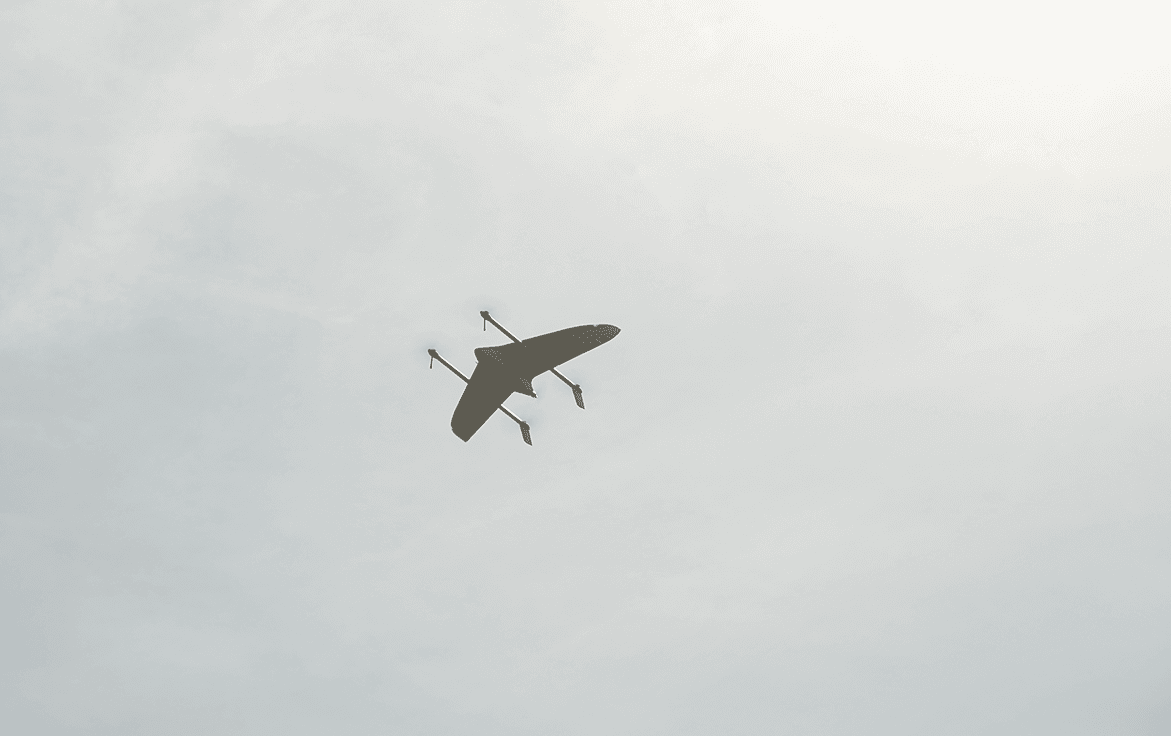
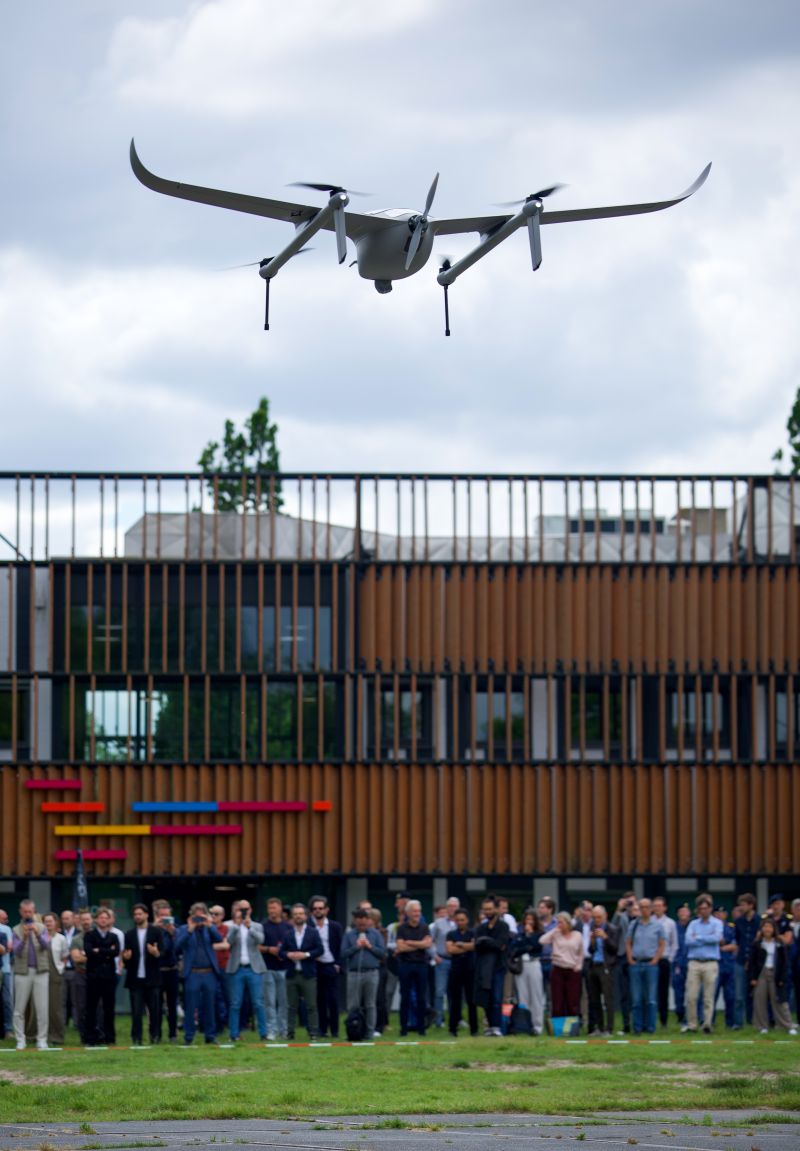
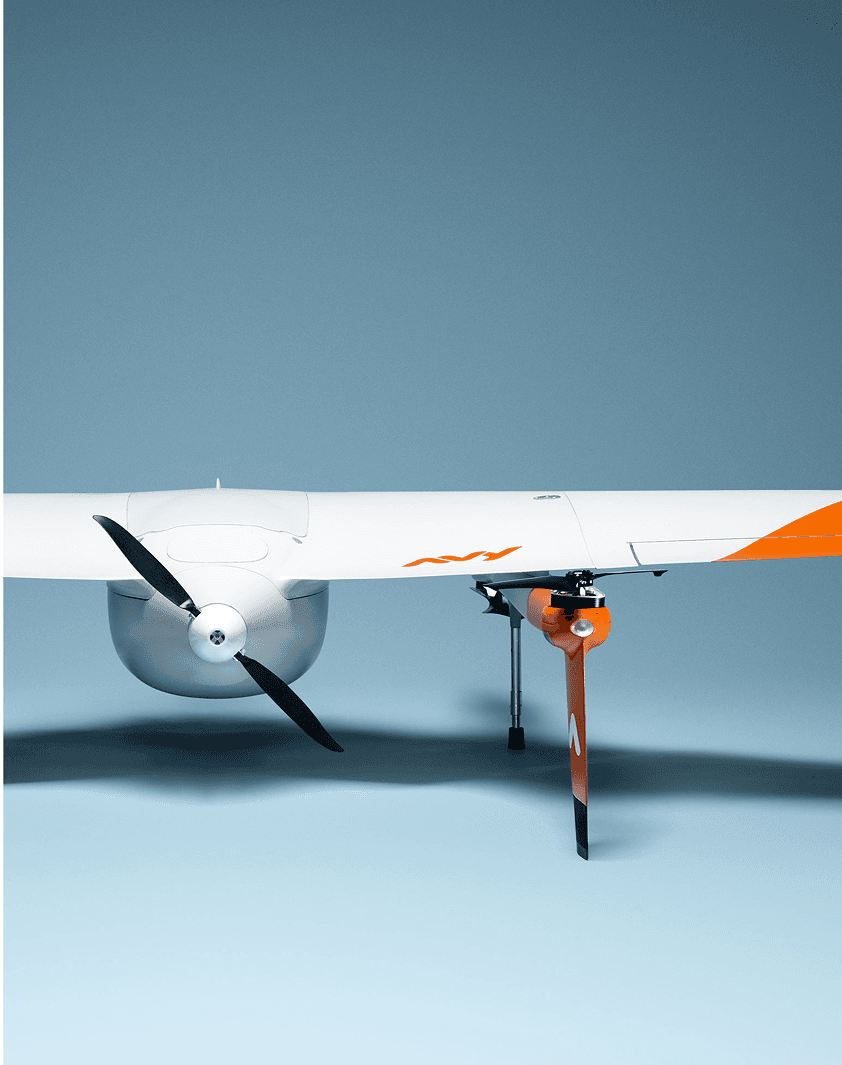
Aera is a robust VTOL, fixed wing drone. It takes off and lands vertically like a helicopter before transitioning to the efficient flight of a plane by leveraging its wings.
a black man wearing a headphone, side view
100 km

Range on a single charge

75 min

Max flight time

3 kg

Payload capacity

Fundamentally fixed-wing

Most drones are multirotors. They hover using rotors, which is simple and versatile but extremely inefficient over distance. A comparable multicopter covers 7km on a single charge. The Avy Aera covers 100km.

The difference is lift. Fixed-wing aircraft generate lift aerodynamically as they move through the air, using a fraction of the energy a multicopter needs to stay airborne. The Aera uses this principle to cover long distances efficiently — cruising at 23 m/s (83 km/h) on a single 1 kWh battery for up to 75 minutes.

For organisations that need aerial coverage across large areas — ports, energy networks, coastlines, rail corridors — this is the difference between a drone that works and one that doesn't.

VTOL fixed wing

Takes off anywhere, flies like a plane.

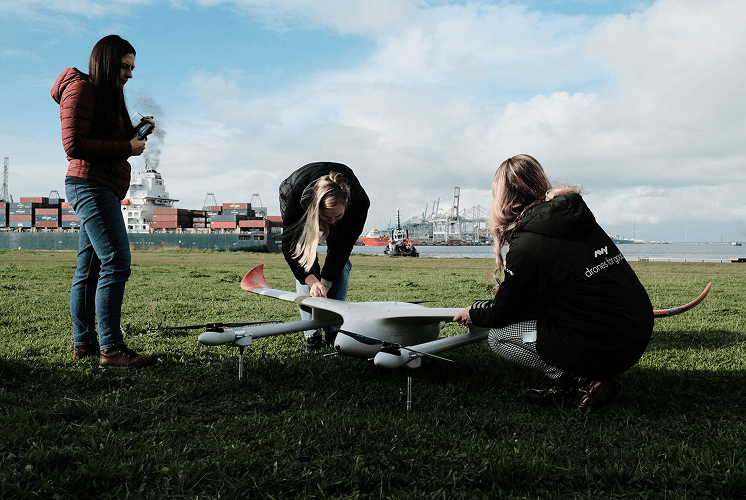
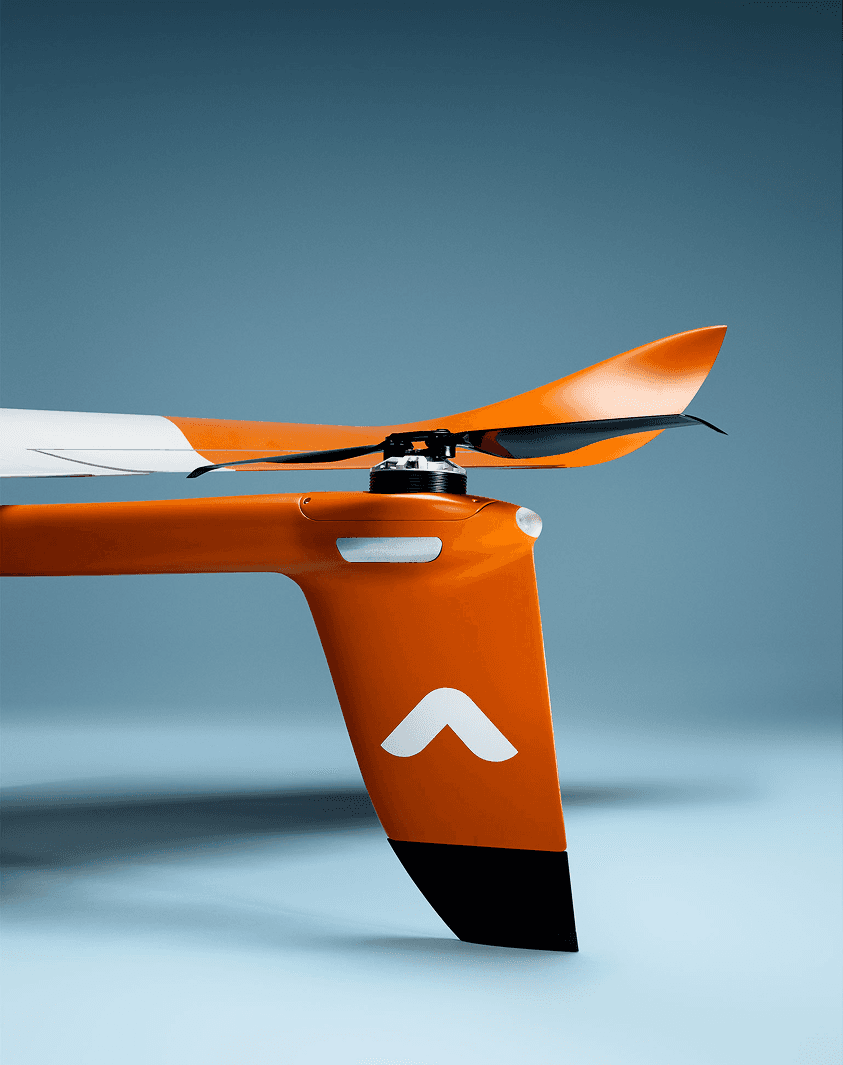
Fixed-wing aircraft traditionally need a runway or a catapult to launch and a net or a runway to land. This makes them impractical for most operational environments. The Avy Aera solves this with four VTOL rotors that lift the aircraft vertically from any flat surface, transition it to fixed-wing cruise flight, and return it to a vertical landing.

The result is an aircraft that combines the operational simplicity of a multicopter with the range and speed of a fixed-wing plane. It launches from a docking station, a rooftop, a ship deck, or an open field. No runway. No catapult. No net.

aircraft
drone flying

Vertical takeoff and landing

Transitions to fixed-wing cruise

Works with Avy Dock

drone flying

Vertical takeoff and landing

Transitions to fixed-wing cruise

Works with Avy Dock

Operability

Operational in wind and rain

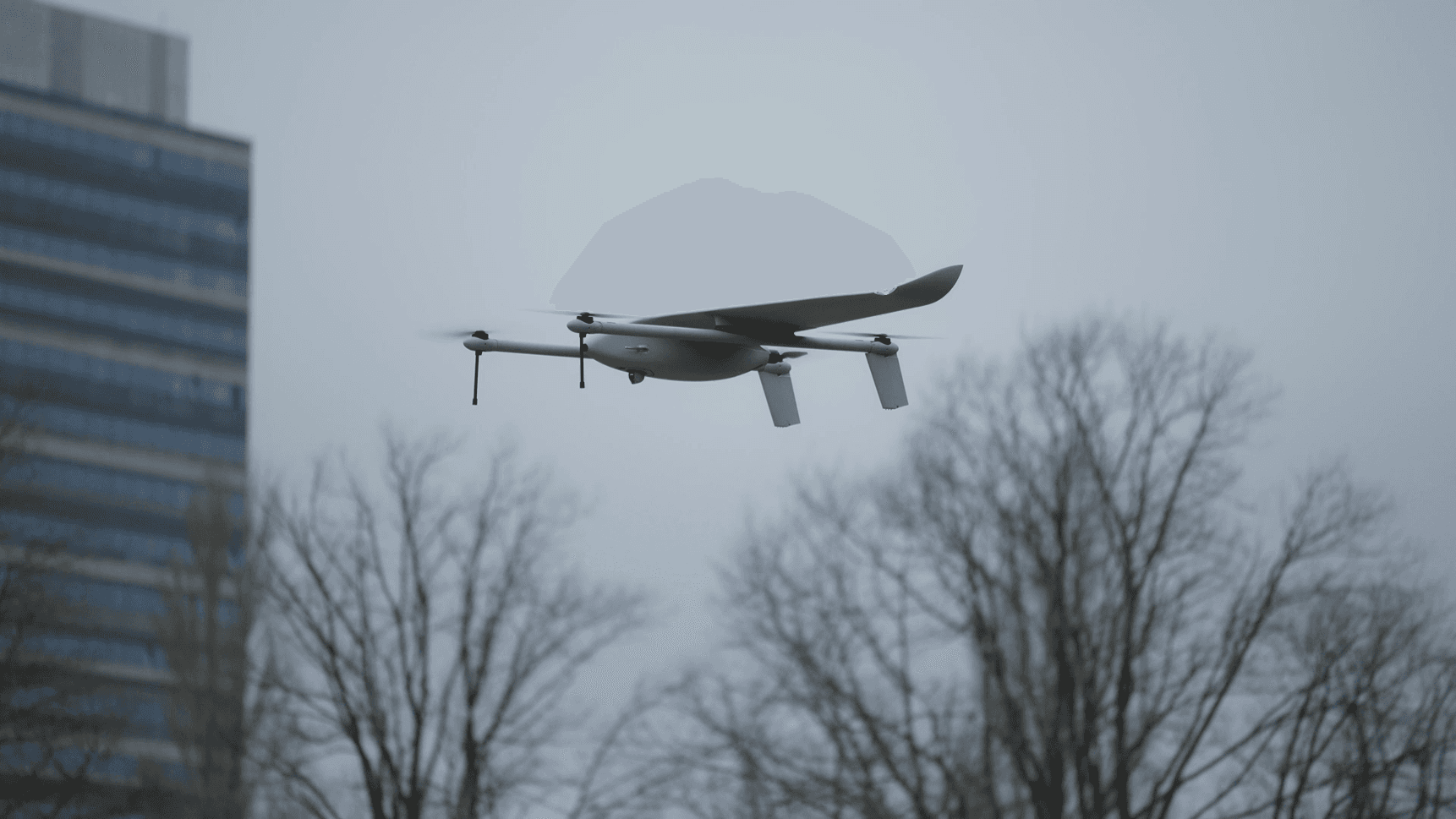
The Aera is designed to fly in conditions that ground most commercial drones. Wind resistance of 30 knots including gusts covers the majority of operational weather in northern Europe. The airframe and electronics are waterproofed for flight in rain. Dual heated pitot tubes with software failsafes maintain accurate airspeed measurement in cold and wet conditions.

Operating temperature runs from 0°C to 40°C. The aircraft flies in the dark. It flies in sea spray. It is not a fair-weather system.
aircraft
drone flying

30 knots wind resistance

Waterproofed airframe

0°C to 40°C operating range

drone flying

30 knots wind resistance

Waterproofed airframe

0°C to 40°C operating range

Safety systems

Designed for repeat missions

Aera carries a suite of safety systems developed for operations over critical infrastructure and populated areas. The QuadChute parachute recovery system deploys automatically in the event of a critical failure, satisfying the ground risk mitigation requirements for BVLOS operations. A flight termination system, return-to-land, rally points, and enhanced containment give operators multiple layers of contingency.

ADS-B In and Out allows the aircraft to detect and be detected by manned aviation. Remote ID broadcasts the aircraft's identity and position in compliance with EU regulations.

Dual LTE command and control with direct radio backup means the aircraft maintains its connection in environments where a single link would be unreliable.
aircraft
drone flying

QuadChute parachute recovery

ADS-B In/Out and Remote ID

Dual LTE + direct radio backup

drone flying

QuadChute parachute recovery

ADS-B In/Out and Remote ID

Dual LTE + direct radio backup

Payload

Carries sensors, cargo and AI computing

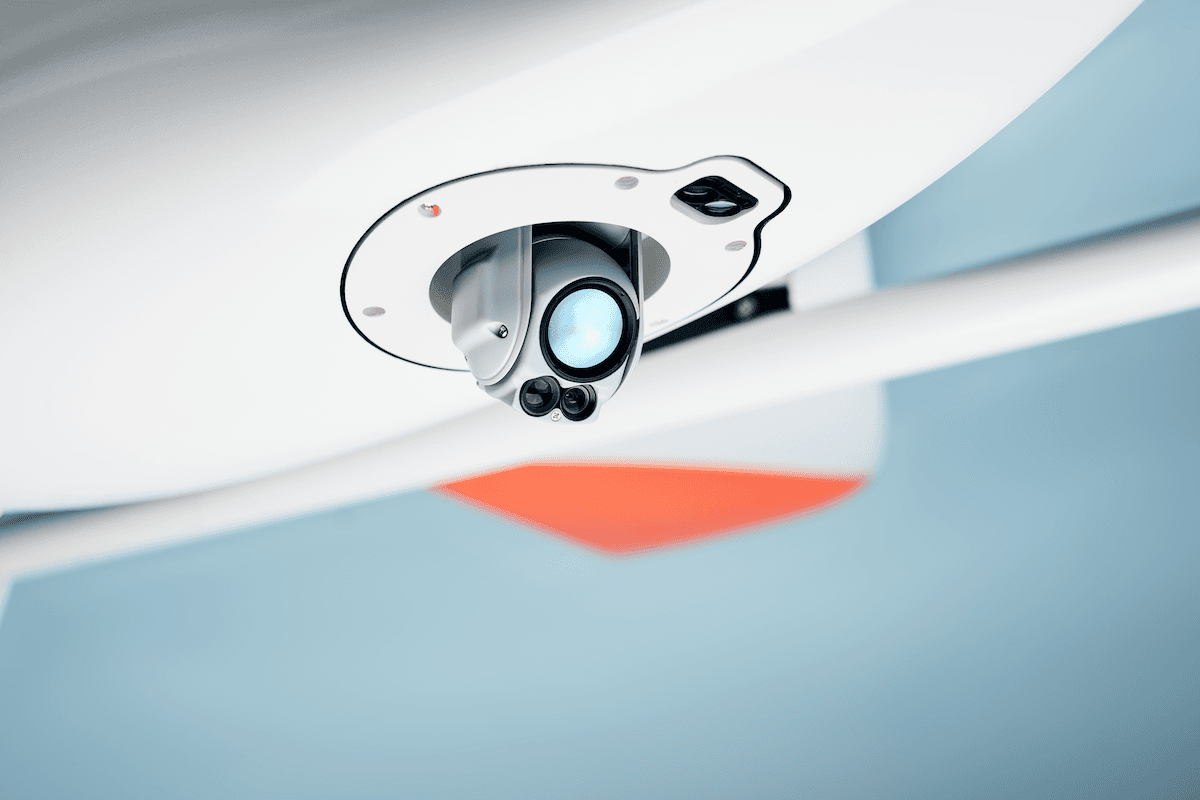
The Aera carries up to 3kg in an 8-litre payload bay — enough for a dual-sensor surveillance payload, a medical cargo box, or an AI compute module for onboard processing. With the QuadChute parachute installed, payload capacity is 2kg.

The payload bay accepts sensor payloads, cargo configurations, and AI compute units. Payloads can be swapped between missions without tools.
aircraft
drone flying

3kg payload

8L payload volume

drone flying

3kg payload

8L payload volume

Specifications

Characteristics

Dimensions

1500 x 2400 x 300 mm (L x W x H)

MTOW

19.5 kg

Power

1 kWh smart battery

Propulsion (up)

4x Quad motor VTOL

Propulsion (forward)

1x pusher motor

Charging

Automated upon landing

Charge speed

20% to 90% in 60 mins

Flight performance - Standard battery

Range

+100km

Range MTOW

80km

Max endurance

75 min

Cruise speed

23m/s (83km/h)

Turn radius

90m

Flight performance - Extended battery

Range

+200km

Range at MTOW

170km

Max endurance

Operating conditions

Wind resistance

30 knots, including gusts

Temperature

0°C to 40°C

Payload

Capacity (no parachute)

3 kg

Capacity (with parachute)

2 kg

Dimensions

300 x 200 x 150 mm (L x W x H)

Volume

8 L

Available payloads

Sensors, cargo, AI compute

Safety & communications

Command and control

Dual LTE

Backup link

Direct radio

Transponder

ADS-B In, ADS-B Out, Remote ID

Positioning

Dual GNSS + RTK, triple IMU

Airspeed sensing

Pitot tubes with software failsafes

Recovery system

Flight termination system

Safety features

QuadChute, return-to-land, rally points, enhanced containment

Safety & communications

Command and control

Dual LTE

Backup link

Direct radio

Transponder

Dual heated pitot tubes

Direct link

Optional

Recovery system

Flight termination system

Safety features

QuadChute, return-to-land, rally points, enhanced containment

Safety & communications

Command and control

Dual LTE

Backup link

Direct radio

Sensing

ADS-B In, ADS-B Out, Remote ID

Positioning

Dual GNSS + RTK, triple IMU

Airspeed sensing

Pitot tubes with software failsafes

Recovery system

Flight termination system

Safety features

QuadChute, return-to-land, rally points, enhanced containment

Get the full brochure & specsheets

Did we miss anything?

Here are a few of the frequently asked questions

What is a VTOL drone?
icon

VTOL stands for vertical takeoff and landing. A VTOL drone launches and lands vertically like a helicopter, without needing a runway, catapult, or recovery net. The Avy Aera is a fixed-wing VTOL — it takes off vertically, transitions to efficient fixed-wing cruise flight, and lands vertically. This gives it the range of a fixed-wing aircraft with the operational simplicity of a multicopter.

How far can Aera fly?
icon

On a standard 1 kWh battery, Aera covers 100km at standard weight and 80km at maximum takeoff weight. With the extended battery, range increases to 200km (170km at MTOW). Flight time is 75 minutes on a standard battery and over 120 minutes on the extended battery.

What is the difference between Aera and a multicopter?
icon

Range and efficiency. A multicopter generates lift using rotors, which consumes a lot of energy. A comparable multicopter covers around 7km on a single charge. The Aera generates lift aerodynamically using its wings, covering 100km on a single charge — roughly 14 times further. For industrial applications covering large areas, this difference is decisive.

Can Aera fly in rain and wind?
icon

Yes. Multiple docking stations are managed from a single remote command centre. Additional docks can be added to extend coverage along a corridor or across a wider area without replacing existing infrastructure.

What payloads does Aera carry?
icon

Aera carries up to 3kg in an 8-litre payload bay. Available configurations include thermal and RGB sensor payloads, the Avy MedBox for medical cargo, and AI compute modules for onboard processing. With the QuadChute parachute installed, payload capacity is 2kg. Payloads can be swapped between missions without tools.

Is Aera BVLOS capable?
icon

Yes. Aera is designed specifically for BVLOS operations. It carries ADS-B In/Out, Remote ID, dual LTE command and control with direct radio backup, and a QuadChute parachute recovery system that meets BVLOS ground risk mitigation requirements. Avy operates Aera under its BVLOS LUC — one of Europe's first.

Does Aera need a pilot on site?
icon

No. Paired with the Avy Dock, Aera launches, executes its mission, and returns to charge fully autonomously. The remote pilot operates from anywhere with an internet connection. No ground crew is required at the deployment site.

drone brain

FAQ

drone brain

FAQ