Fixed-wing VTOL

Fixed-wing VTOL

The architecture that makes long-range autonomous operations possible

Wings beat rotors at range

Most commercial drones are multirotors. They are versatile, easy to deploy, and well understood. For short-range tasks, they are often the right choice. But for operations that require covering real distances — inspecting a pipeline, monitoring a coastline, responding to an emergency kilometres away the multirotor hits a fundamental limit.

Avy builds fixed-wing VTOL drones. Not because it is harder, but because it is the only architecture that delivers the range, endurance, and operational independence that serious autonomous missions require.
vtol flying

How Avy builds fixed-wing VTOL for autonomous operations

A multirotor drone uses its rotors to fight gravity constantly. Every second of flight, significant energy is consumed just to stay airborne. That is why most multirotors have a flight time of 20 to 40 minutes and a practical range of a few kilometres.

A fixed-wing aircraft generates lift from its wings during cruise flight, using a fraction of the energy a multirotor needs to cover the same distance. The Avy Aera covers 100km on a single charge at 100km/h. A multirotor cannot come close to that.

The trade-off has always been launch and recovery. Fixed-wing aircraft need a runway or catapult to take off, and a cleared area to land. That constraint makes them impractical for most real-world deployments.

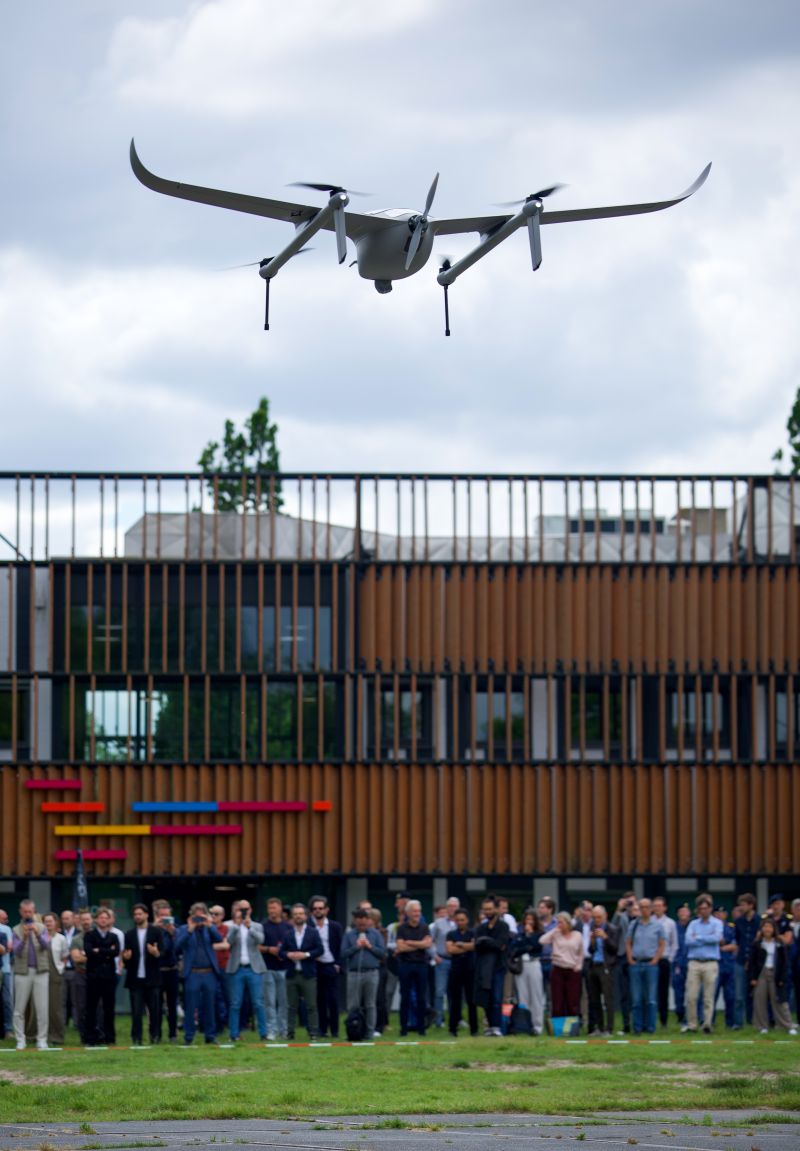
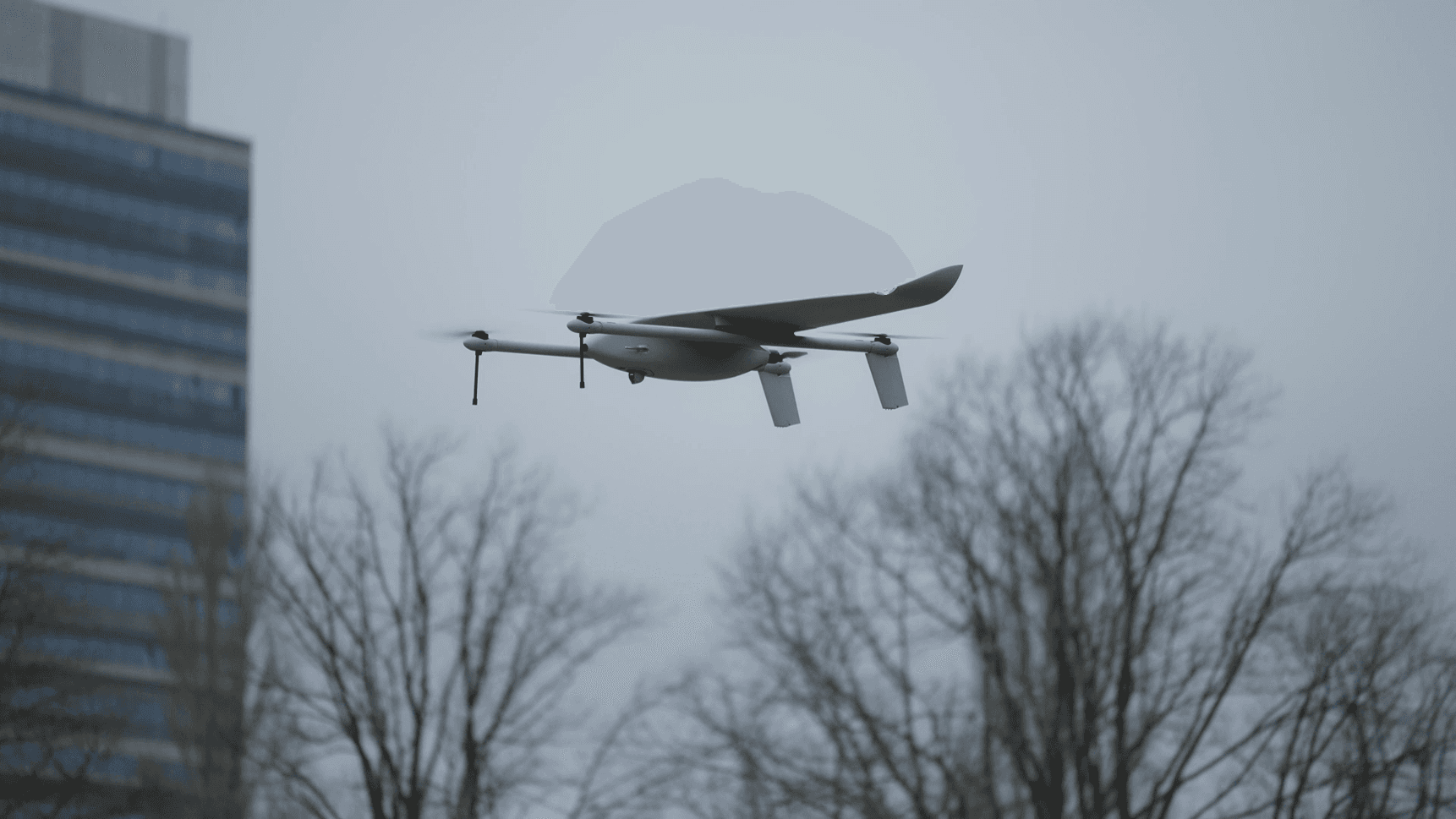
VTOL solves this. The Aera takes off and lands vertically like a helicopter, then transitions to fixed-wing cruise for the journey. No runway. No catapult. No ground crew. Deployable from a rooftop, a ship deck, a field, or a docking station.

Multirotor or fixed wing VTOL

Type of VTOL

Multirotor

Fixed-wing

Endurance

20–45 min

60–180 min

Cruise Speed

40–80 km/h

80–150 km/h

Hover Precision

Excellent

Moderate

Mechanical Complexity

Limited

Medium

BVLOS Suitability

None

Excellent

Typical Use Case

Inspection, delivery, imaging

Survey, BVLOS, long-range

How Avy builds fixed-wing VTOL

The Avy Aera is a fixed-wing VTOL hybrid designed from the ground up for long-range autonomous operations. It takes off vertically using four lift rotors, transitions to fixed-wing cruise, and covers up to 100km at 100km/h on a single charge.

During transition, the phase where most fixed-wing VTOL aircraft are most vulnerable, the Aera maintains full redundancy across its propulsion system. It operates in winds up to 30 knots and in rain. It carries payloads up to 3kg in a modular bay that accepts EO, IR, and mission-specific sensors.

Paired with the Avy Dock, it launches autonomously in 30 seconds and recharges without anyone on site. Paired with Avy's remote operations software, it runs scheduled missions, responds to alerts, and feeds data back to operators anywhere in the world.

This is what fixed-wing VTOL makes possible at scale.

Frequently asked questions.

What is a fixed-wing drone?

A fixed-wing drone is an unmanned aircraft that generates lift from wings rather than rotors. Like a conventional aircraft, it flies forward to stay airborne, which makes it significantly more efficient over distance than a multirotor. Fixed-wing drones can cover far greater ranges on the same battery capacity, making them the preferred choice for long-range autonomous operations.

What is the difference between a fixed-wing drone and a multirotor?

A multirotor uses spinning rotors to generate lift and stay airborne, consuming significant energy just to hover. A fixed-wing drone generates lift from its wings during forward flight, using far less energy over distance. The trade-off is that fixed-wing aircraft traditionally need a runway to take off and land. Fixed-wing VTOL hybrids like the Avy Aera solve this by taking off and landing vertically, combining the efficiency of fixed-wing flight with the flexibility of a multirotor.

What is a fixed-wing VTOL drone?

A fixed-wing VTOL drone takes off and lands vertically like a multirotor, then transitions to efficient fixed-wing cruise flight for the journey. This combines the range and endurance of a fixed-wing aircraft with the deployment flexibility of a multirotor. No runway, no catapult, no ground crew required. It is the architecture Avy chose for the Aera because it is the only design that delivers both operational flexibility and long-range performance.

How far can a fixed-wing drone fly?

Fixed-wing drones vary significantly by platform. Consumer and light commercial fixed-wing drones typically cover 20 to 50km. Purpose-built long-range platforms like the Avy Aera cover up to 100km on a single charge at 100km/h. This makes fixed-wing drones the only viable option for operations that require covering large areas, long corridors, or remote locations in a single flight.

Can a fixed-wing drone hover?

A conventional fixed-wing drone cannot hover — it needs forward airspeed to generate lift. A fixed-wing VTOL hybrid like the Aera can hover during take-off and landing using its vertical lift rotors, but transitions to forward flight for cruise. This means it cannot loiter over a fixed point the way a multirotor can, which is a genuine trade-off. For most long-range missions, this is not a limitation — the speed and range advantages far outweigh the inability to hover mid-mission.

Who uses fixed-wing drones commercially?

Fixed-wing drones are used by organisations that need to cover large areas or long distances efficiently. Common applications include infrastructure inspection along pipelines, power lines, and rail corridors; maritime and coastal surveillance; emergency response over wide areas; and defence ISR. Avy operates fixed-wing VTOL drones for emergency services, port authorities, defence organisations, and energy network operators across Europe.

What is a fixed-wing drone?

A fixed-wing drone is an unmanned aircraft that generates lift from wings rather than rotors. Like a conventional aircraft, it flies forward to stay airborne, which makes it significantly more efficient over distance than a multirotor. Fixed-wing drones can cover far greater ranges on the same battery capacity, making them the preferred choice for long-range autonomous operations.

What is the difference between a fixed-wing drone and a multirotor?

A multirotor uses spinning rotors to generate lift and stay airborne, consuming significant energy just to hover. A fixed-wing drone generates lift from its wings during forward flight, using far less energy over distance. The trade-off is that fixed-wing aircraft traditionally need a runway to take off and land. Fixed-wing VTOL hybrids like the Avy Aera solve this by taking off and landing vertically, combining the efficiency of fixed-wing flight with the flexibility of a multirotor.

What is a fixed-wing VTOL drone?

A fixed-wing VTOL drone takes off and lands vertically like a multirotor, then transitions to efficient fixed-wing cruise flight for the journey. This combines the range and endurance of a fixed-wing aircraft with the deployment flexibility of a multirotor. No runway, no catapult, no ground crew required. It is the architecture Avy chose for the Aera because it is the only design that delivers both operational flexibility and long-range performance.

How far can a fixed-wing drone fly?

Fixed-wing drones vary significantly by platform. Consumer and light commercial fixed-wing drones typically cover 20 to 50km. Purpose-built long-range platforms like the Avy Aera cover up to 100km on a single charge at 100km/h. This makes fixed-wing drones the only viable option for operations that require covering large areas, long corridors, or remote locations in a single flight.

Can a fixed-wing drone hover?

A conventional fixed-wing drone cannot hover — it needs forward airspeed to generate lift. A fixed-wing VTOL hybrid like the Aera can hover during take-off and landing using its vertical lift rotors, but transitions to forward flight for cruise. This means it cannot loiter over a fixed point the way a multirotor can, which is a genuine trade-off. For most long-range missions, this is not a limitation — the speed and range advantages far outweigh the inability to hover mid-mission.

Who uses fixed-wing drones commercially?

Fixed-wing drones are used by organisations that need to cover large areas or long distances efficiently. Common applications include infrastructure inspection along pipelines, power lines, and rail corridors; maritime and coastal surveillance; emergency response over wide areas; and defence ISR. Avy operates fixed-wing VTOL drones for emergency services, port authorities, defence organisations, and energy network operators across Europe.