Autonomous drone operations for fire services

In fire service operations, the first aerial view of an incident changes everything. Whether it is a wildfire spreading across terrain too vast for ground crews to monitor, a structural fire where commanders need situational awareness before units enter a building, or a search and rescue operation in low visibility conditions, an autonomous drone overhead transforms how fire services respond.

Avy has conducted proof of concept drone operations with a Dutch national fire service, demonstrating wildfire detection using thermal imaging across large nature reserves. That programme won an Airwards in the Emergency Response and SAR category in 2021, recognising it as one of the most significant positive drone use cases globally that year. The capability has since been developed into a deployable system for fire services across Europe.

How Avy drones support fire services

Wildfire detection and monitoring

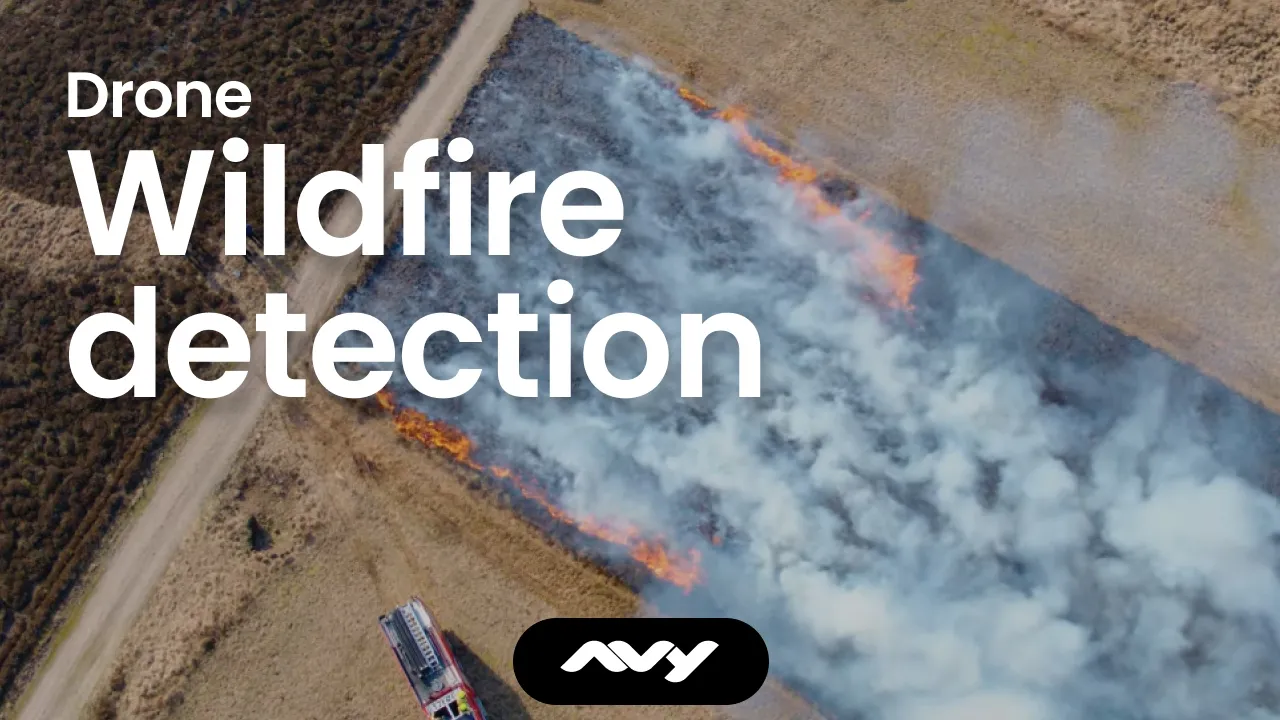
Early wildfire detection is the single most effective intervention available to fire services. A fire identified at 0.1 hectares is containable. The same fire identified at 10 hectares is not.

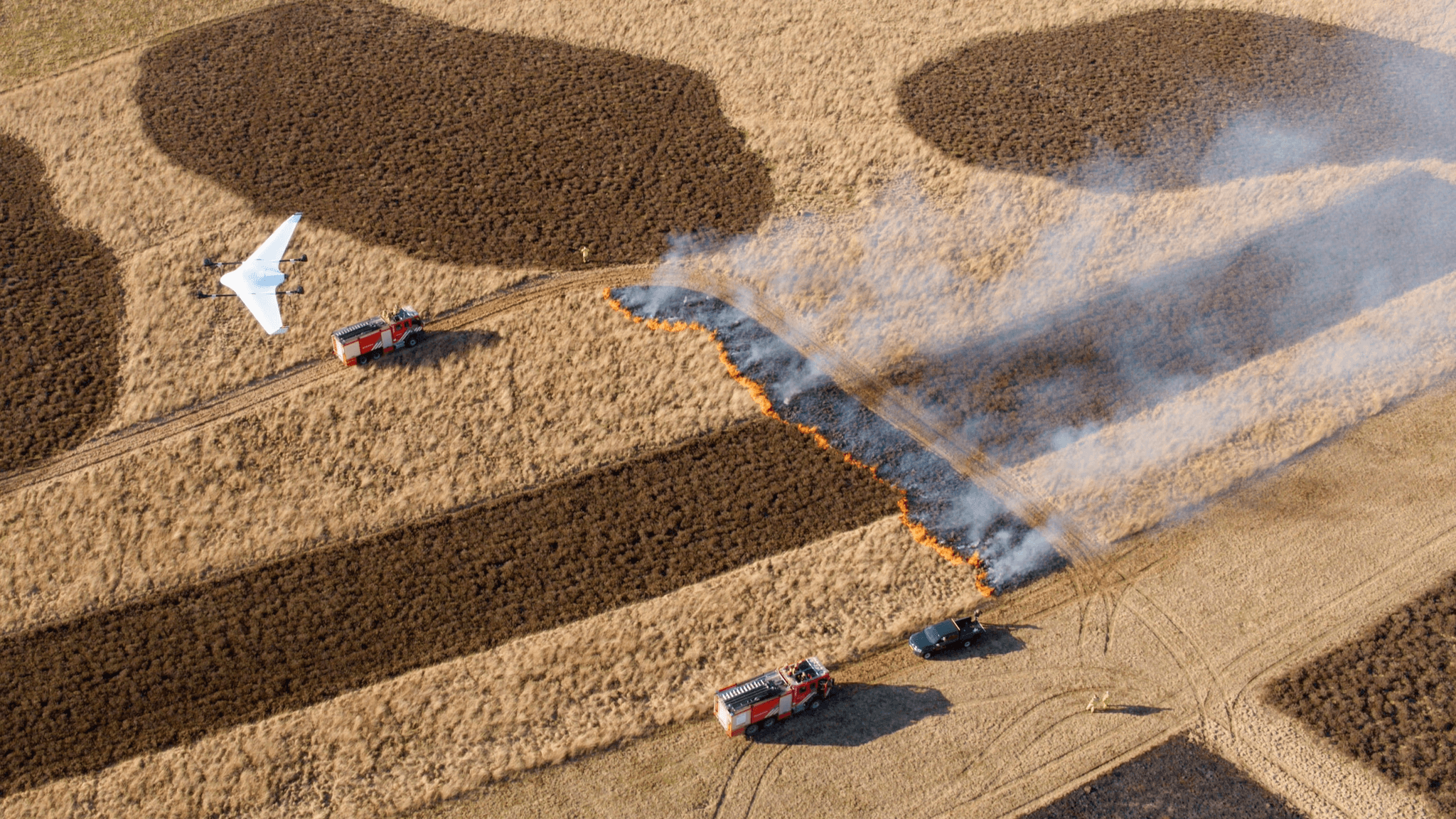
Avy conducted wildfire detection flights over Dutch national park terrain using the Avy Aera equipped with thermal and RGB cameras. Operating BVLOS, the aircraft covered large areas of nature reserve in a single flight, detecting heat signatures invisible to standard cameras and providing precise location data to fire service commanders on the ground.

Structural fire monitoring

When a structural fire is active, commanders need situational awareness before units enter a building. An autonomous drone overhead — thermal camera live, feeding to the operations centre — provides a persistent view of hotspots, fire spread, and structural compromise that ground-based observation cannot replicate. The Aera's ability to loiter over a scene and relay live thermal and RGB imagery gives incident commanders the information needed to make faster, safer decisions.

Search and rescue support

In post-fire environments, and in wildfires where personnel may be in the field, thermal imaging from altitude provides search capability that ground teams cannot match. The Aera detects heat signatures through smoke and in darkness, covering ground quickly and directing rescue teams to priority locations.

The aircraft: Aera

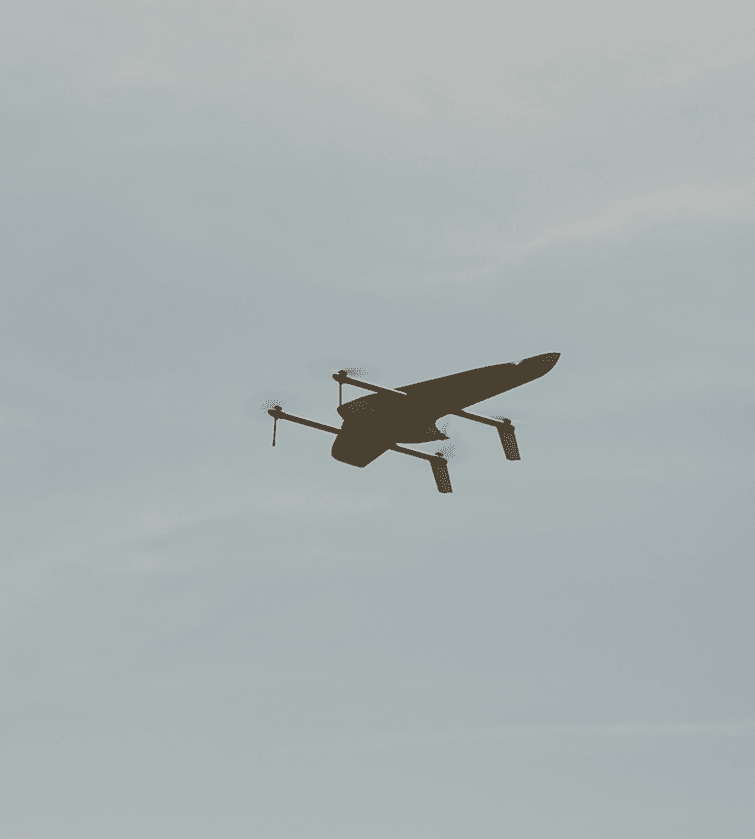
The Avy Aera is a VTOL drone; it takes off and lands vertically from a docking station, rooftop, or ground pad, then transitions to fixed-wing allowing it to fly 5-10 times further than regular drones. The system enables deployment from within port facilities without dedicated infrastructure.

100 km/h

Cruise speed

100 km

Range per charge

3 kg

Payload capacity

30+ knots

Wind tolerance
avy drone

Proof of concept — wildfire detection in the Netherlands

Avy conducted a multi-phase wildfire detection programme with a Dutch national fire department, covering terrain in a major Dutch national park. The programme tested the Avy Aera's ability to detect early-stage fires using thermal imaging across large areas of nature reserve, with the goal of establishing whether autonomous drones could provide earlier detection than ground-based monitoring.

The results demonstrated that the Aera could distinguish wildfire heat signatures at long range, fly BVLOS patrol routes autonomously over protected terrain, and deliver actionable location data to fire department commanders in real time.

The collaboration was recognised with an Airwards in the Emergency Response and SAR category in 2021.

Must Read

Brandweer case study

Brandweer (Dutch fire service) work to reduce fires, damage, and casualties. They respond to more than 11,000 incidents every month.

Dominik Kondziela

Dominik Kondziela

Marketing & Communications Lead

Emeregncy response

Must Read

Brandweer case study

Brandweer (Dutch fire service) work to reduce fires, damage, and casualties. They respond to more than 11,000 incidents every month.

Dominik Kondziela

Dominik Kondziela

Marketing & Communications Lead

Why fire departments choose autonomous drones

Conventional drone operations in fire department contexts face a consistent set of constraints. Short battery life limits coverage. The requirement for a pilot on site adds to the operational burden at an already complex incident. And in the most demanding conditions — smoke, wind, darkness — consumer and prosumer drones are unreliable or grounded entirely.

Avy's system is designed around the specific demands of fire department deployment. Permanent readiness from a docking station means the aircraft is available the moment an incident is reported, not after a pilot has been mobilised and equipment unpacked. BVLOS authorisation means the aircraft can cover the full extent of an incident zone rather than being limited to the immediate vicinity. And all-weather operation means the system functions when it matters most.

For fire department commanders evaluating autonomous drone capability, the question is not whether drones can assist at an incident. It is whether a drone system can be relied upon to be airborne and delivering intelligence within the first minutes of a response, every time.

Remote monitoring FAQs

Remote monitoring FAQs

How quickly can the drone be deployed to a fire incident?

The Avy Aera launches from its docking station in 30 seconds with no operator on site. Once an incident is reported, the aircraft is airborne and en route within half a minute.

Can the drone operate in smoke and low visibility conditions?

Yes. The Aera's thermal camera detects heat signatures through smoke and in darkness, providing imagery that RGB cameras cannot capture in those conditions. This is particularly valuable for both fire detection and search and rescue in fire-affected environments.

How does the drone help with wildfire detection specifically?

The Aera flies scheduled patrol routes over defined areas, using thermal imaging to detect heat signatures that indicate early-stage fire activity. When an anomaly is detected, commanders receive an alert with location data and live imagery. Early detection at this scale is not achievable with ground-based monitoring alone.

Can the system be integrated with existing fire department dispatch infrastructure?

Yes. Avy's operations centre can be co-located with or integrated into existing fire department dispatch environments, allowing the drone system to be triggered and monitored from the same facility as other response assets.

Is Avy authorised to fly BVLOS for fire department operations?

Yes. Avy holds a BVLOS LUC (Light UAS Operator Certificate) in the Netherlands, authorising flights beyond visual line of sight. This authorisation is what makes long-range autonomous fire department operations legally viable.

What regulations apply to drone operations for fire departments?

In Europe, commercial drone operations fall under EASA's UAS regulations. Most fixed-wing BVLOS operations require an operational authorisation in the Specific category, or a Light UAS Operator Certificate (LUC) for operators with a mature safety management system. Avy holds a BVLOS LUC in the Netherlands — one of the first commercial operators in Europe to do so. Requirements vary by country, altitude, and airspace class, so early engagement with the relevant national aviation authority is recommended.

How quickly can the drone be deployed to a fire incident?

The Avy Aera launches from its docking station in 30 seconds with no operator on site. Once an incident is reported, the aircraft is airborne and en route within half a minute.

Do you offer post-flight data analysis or just raw footage?

We offer both — from raw data to fully analyzed reports with AI-driven insights, maps, and annotated findings.

How frequently can monitoring be scheduled?

Monitoring can be scheduled on a continuous, daily, weekly, or on-demand basis, depending on your surveillance requirements.

Is Avy authorised to fly BVLOS for fire department operations?

Yes. Avy holds a BVLOS LUC (Light UAS Operator Certificate) in the Netherlands, authorising flights beyond visual line of sight. This authorisation is what makes long-range autonomous fire department operations legally viable.

What regulations apply to drone operations for fire departments?

In Europe, commercial drone operations fall under EASA's UAS regulations. Most fixed-wing BVLOS operations require an operational authorisation in the Specific category, or a Light UAS Operator Certificate (LUC) for operators with a mature safety management system. Avy holds a BVLOS LUC in the Netherlands — one of the first commercial operators in Europe to do so. Requirements vary by country, altitude, and airspace class, so early engagement with the relevant national aviation authority is recommended.

How quickly can the drone be deployed to a fire incident?

The Avy Aera launches from its docking station in 30 seconds with no operator on site. Once an incident is reported, the aircraft is airborne and en route within half a minute.

Can the drone operate in smoke and low visibility conditions?

Yes. The Aera's thermal camera detects heat signatures through smoke and in darkness, providing imagery that RGB cameras cannot capture in those conditions. This is particularly valuable for both fire detection and search and rescue in fire-affected environments.

How does the drone help with wildfire detection specifically?

The Aera flies scheduled patrol routes over defined areas, using thermal imaging to detect heat signatures that indicate early-stage fire activity. When an anomaly is detected, commanders receive an alert with location data and live imagery. Early detection at this scale is not achievable with ground-based monitoring alone.

Can the system be integrated with existing fire department dispatch infrastructure?

Yes. Avy's operations centre can be co-located with or integrated into existing fire department dispatch environments, allowing the drone system to be triggered and monitored from the same facility as other response assets.

Is Avy authorised to fly BVLOS for fire department operations?

Yes. Avy holds a BVLOS LUC (Light UAS Operator Certificate) in the Netherlands, authorising flights beyond visual line of sight. This authorisation is what makes long-range autonomous fire department operations legally viable.

What regulations apply to drone operations for fire departments?

In Europe, commercial drone operations fall under EASA's UAS regulations. Most fixed-wing BVLOS operations require an operational authorisation in the Specific category, or a Light UAS Operator Certificate (LUC) for operators with a mature safety management system. Avy holds a BVLOS LUC in the Netherlands — one of the first commercial operators in Europe to do so. Requirements vary by country, altitude, and airspace class, so early engagement with the relevant national aviation authority is recommended.

Ready to discuss your fire department?

Avy works with fire departments and emergency response organisations across Europe to develop and operate autonomous drone programmes for wildfire detection, incident monitoring, and search and rescue support. Contact us to discuss your operational requirements.