Case study
Elia Group × Avy
BVLOS flights completed successfully
high-voltage power lines inspected
total distance flown by aircraft
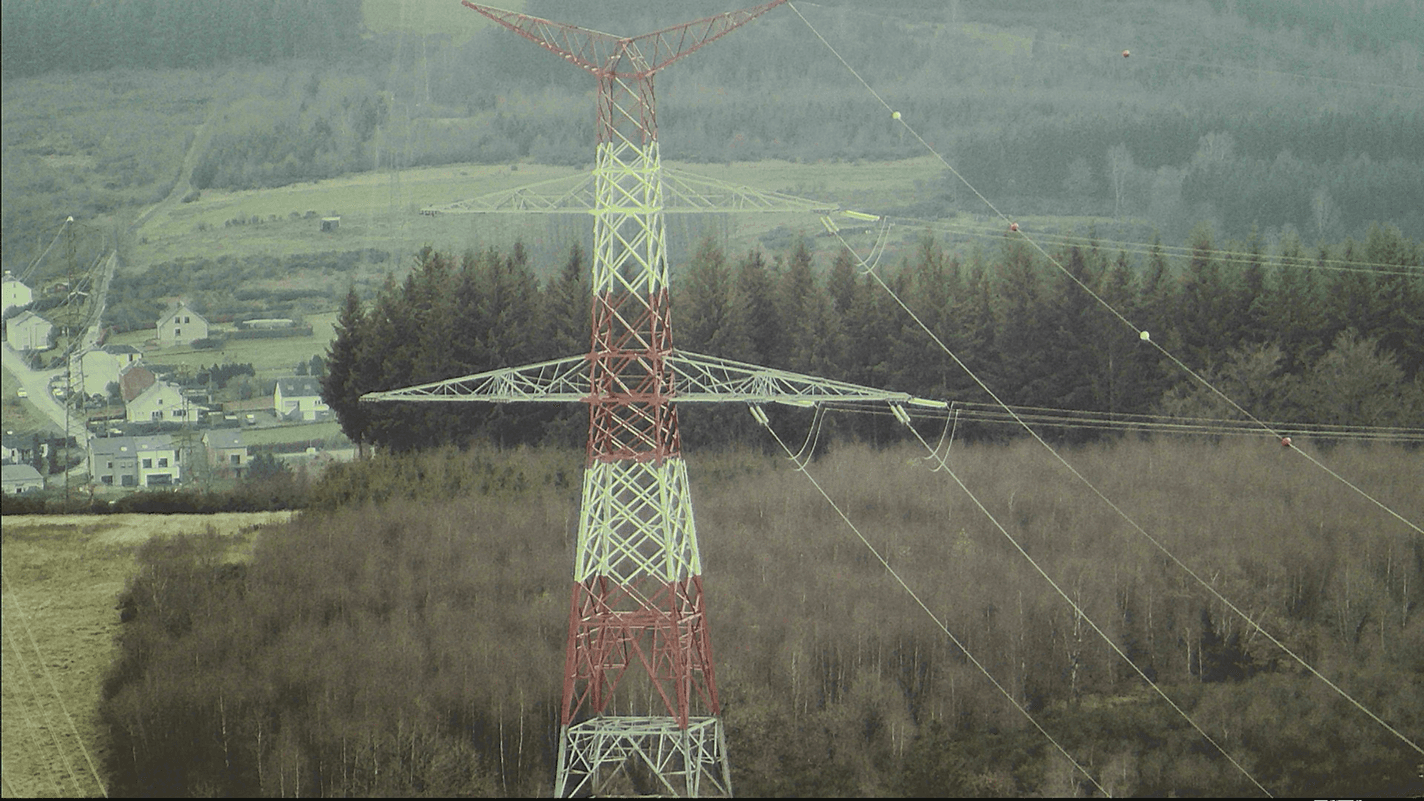
Elia Group operates over 8,000 kilometres of high-voltage electricity transmission infrastructure across Belgium. Inspecting that network safely, frequently, and at scale is one of the defining operational challenges in European energy infrastructure.
The problem
Helicopter patrols are the current benchmark for high-voltage grid inspection. They are thorough but expensive, manual, infrequent, and dependent on weather and airspace availability. Ground crews offer detail but cannot cover the distances required. Static camera systems provide no mobility and lack a view of the top of pylons or wires.
Elia recognised that the traditional inspection model could not scale to meet the demands of a digitised, reliability-critical grid. Their long-term target: conduct 80% of asset monitoring remotely.
The specific challenges were:
Coverage: VLOS drone operations can only inspect small clusters of pylons at a time, nowhere near viable for a network of this scale
Regulatory complexity: BVLOS operations over high-voltage infrastructure across national borders had never been validated in this configuration
Data quality: Inspection data needed to meet Elia's own technical standards for fault detection, not just produce imagery, but actionable intelligence
The solution
Avy and Elia designed a structured Proof of Concept (PoC) to test whether BVLOS drone operations could meet the standard required for operational deployment across Elia's grid.
The programme ran across four modules: BVLOS flight validation, advanced sensor payload testing, remote operations and docking demonstration, and AI-driven data analysis.
Aircraft and sensors
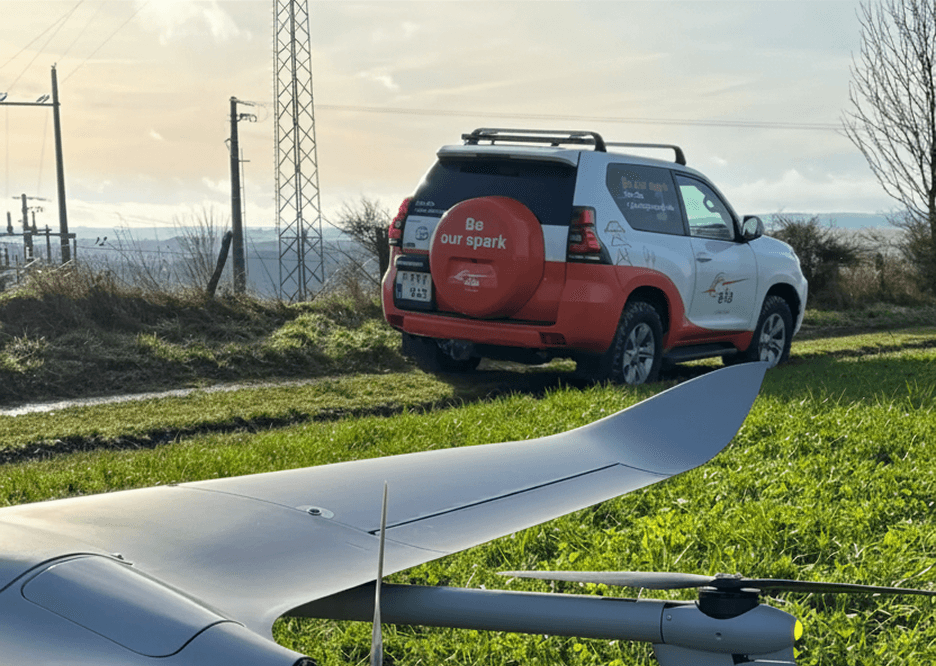
The Avy Aera 4 flew the primary inspection routes, carrying the Raptor (AirAware Camera) for combined optical and thermal imaging, enabling detection of both visual defects and heat anomalies such as overheating insulators. Avy employed a YellowScan LiDAR device, capturing high-density 3D point clouds for precise pylon geometry and terrain mapping
Regulatory framework
Operating BVLOS in Belgian airspace under Avy's Dutch LUC required a Cross-Border Operations application to the Belgian Civil Aviation Authority (BCAA), real-time coordination with the Belgian Ministry of Defence for airspace deconfliction, and a full local conditions assessment. This was the first time Avy's LUC privileges had been validated cross-border at this scale, a regulatory milestone as significant as the technical one.
AI analysis
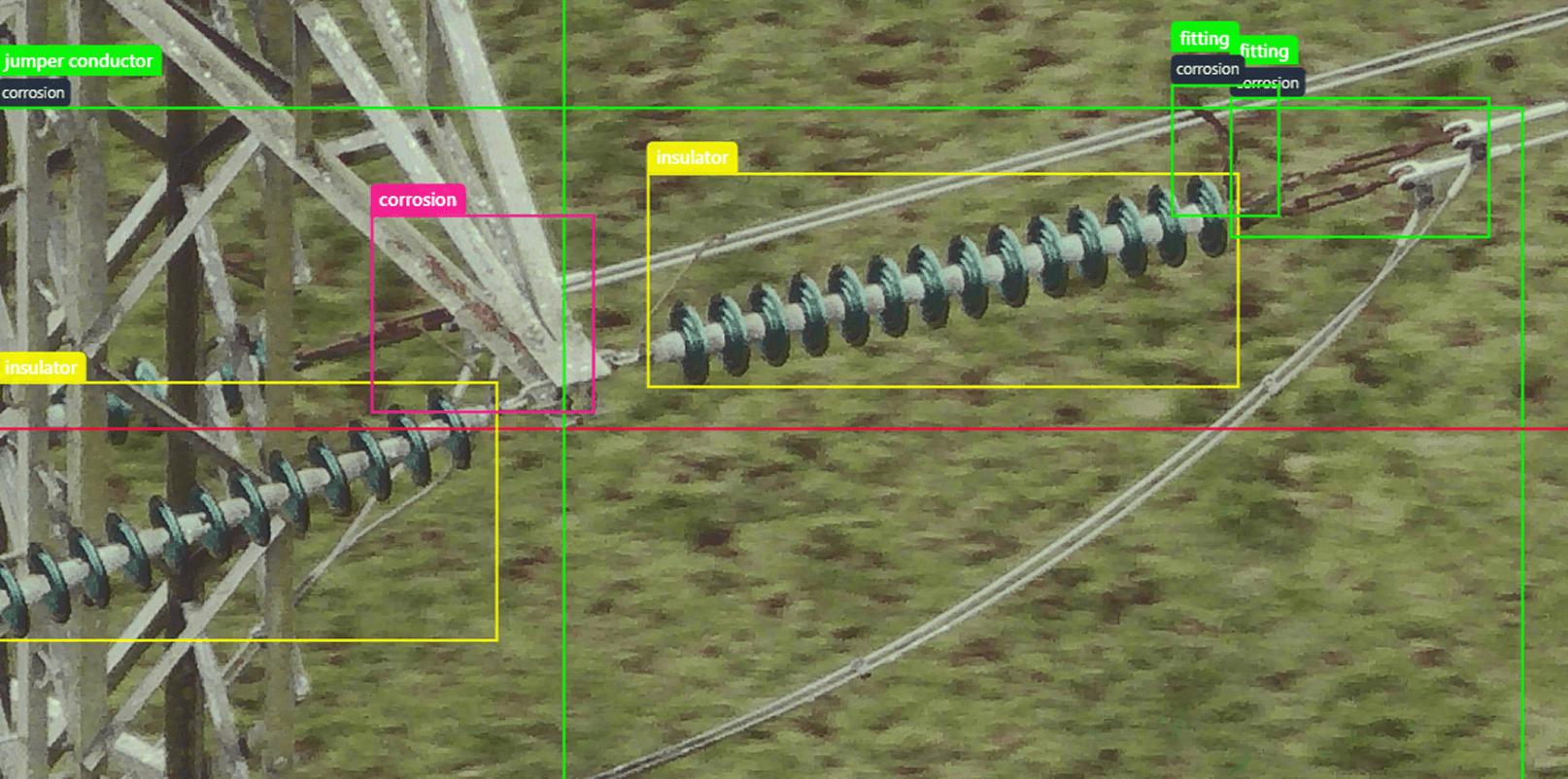
Post-flight data was processed through the Arkensight platform, where every image was spatially mapped to the specific pylon ID in Elia's asset register. AI models were trained on the collected dataset to automatically detect anomalies
Vegetation encroachment
Corrosion
Broken insulators, and
Thermal hotspots
Bird nests
Graded by severity and linked directly to individual assets for ingestion into Elia's asset management system, directly triggering actions in the asset management systems used by TSO’s.
The results
The PoC completed a dedicated week of flight operations in December 2025, in sub-zero temperatures and high humidity, with only one day lost to weather.
8 BVLOS flights completed
261.6 km total distance flown
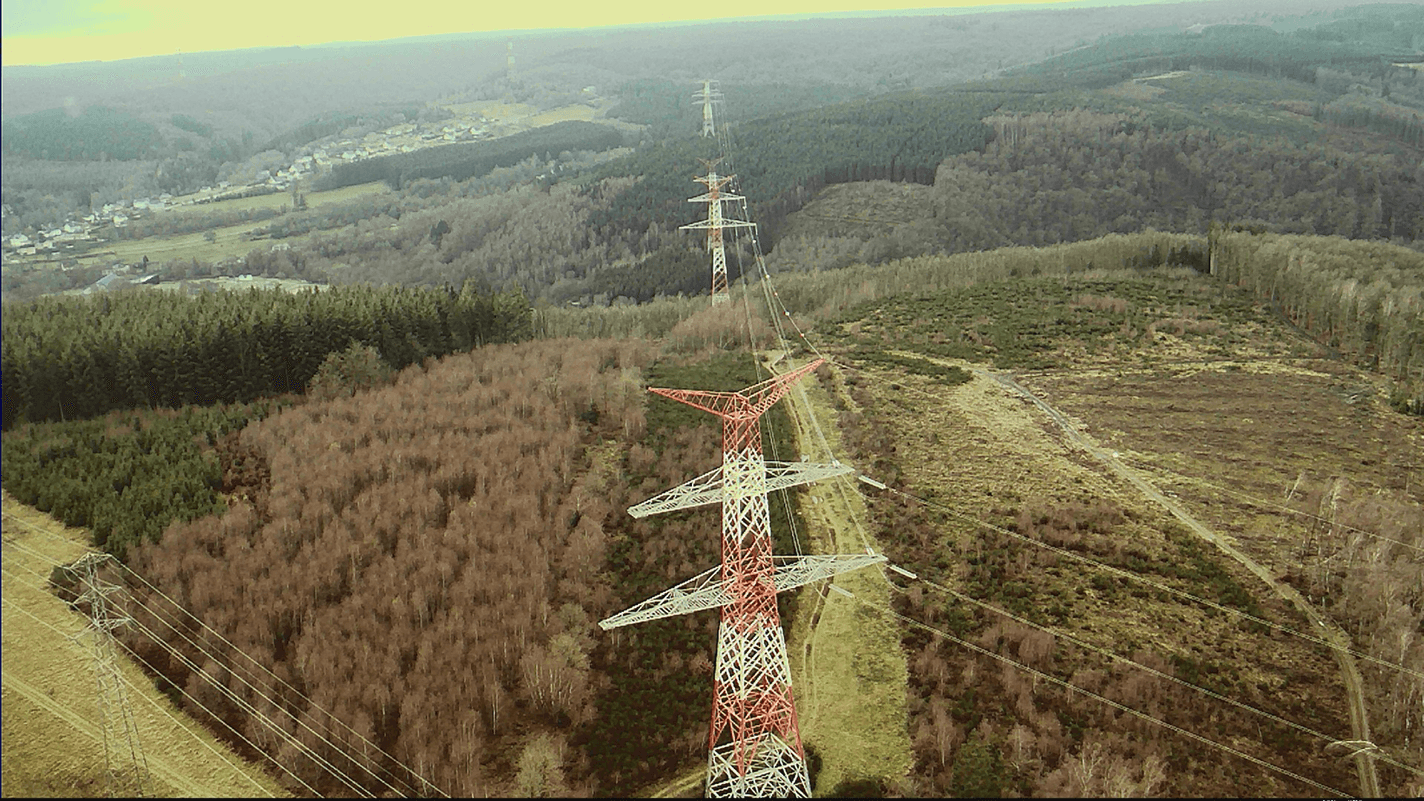
85 km of high-voltage power lines inspected
3 hours 42 minutes total flight time
42% average battery usage per flight
Cross-border BVLOS approval secured and validated with BCAA
LiDAR mapped vegetation encroachment and identified structural detail at pylon level
AI anomaly detection pipeline established and linked to Elia's asset register
What this means for energy infrastructure operators
The Elia PoC demonstrated that BVLOS drone inspection is not a future capability, it is possible, under existing European regulatory frameworks, at distances and scales that make it a genuine alternative to helicopter patrols.
For transmission system operators managing thousands of kilometres of overhead infrastructure, the combination of long-range VTOL aircraft, autonomous docking, and AI-driven analysis changes the economics of line missions such as; emergency response.